


What is MIGS?
At Ophthalmology Associates of the Valley, we’re excited to offer Minimally Invasive Glaucoma Surgery (MIGS) as a revolutionary treatment for glaucoma patients in the San Fernando Valley of Los Angeles, CA. Falling under a new category of glaucoma procedures, MIGS uses micro-surgical techniques to lower intraocular pressure and slow optic nerve damage.
These cutting-edge procedures are less invasive than traditional glaucoma surgeries, thereby reducing the risk of complications. Our practice offers MIGS assessments at both our Encino and West Hills locations. Visit us to explore this innovative approach to glaucoma management.
What Are The Benefits Of MIGS?
At Ophthalmology Associates of the Valley, we recognize the numerous benefits of Minimally Invasive Glaucoma Surgery (MIGS) for patients seeking effective treatment for glaucoma.
The benefits of MIGS eye surgery include:
Less Invasive
MIGS procedures are less invasive than traditional glaucoma surgeries, resulting in shorter operating times, reduced postoperative discomfort, and faster recovery periods.
Combined Procedures
MIGS can be performed concurrently with cataract surgery, minimizing the need for additional surgeries and maximizing convenience for patients.
Lower Intraocular Pressure
MIGS techniques improve the aqueous humor outflow and reduce stress on the optic nerve, helping to preserve vision and prevent further damage.
Lower Risk of Complications
MIGS procedures have a higher safety profile and are associated with a lower risk of complications compared to more invasive surgeries.
Suitable for a Broader Range of Patients
MIGS is ideal for patients with mild to moderate glaucoma, expanding treatment options for a larger population.
Our team understands the importance of embracing innovative and effective glaucoma treatments like MIGS to provide patients with the highest quality of care.
Am I A Candidate for MIGS?
No two glaucoma patients are exactly alike. Patients present with varying subtypes of glaucoma with varying degrees of severity. In addition, each patient has specific visual as well as a specific lifestyle needs; therefore, each glaucoma patient requires a customized treatment plan.
How is MIGS Performed?
As soon as we have established that someone is eligible for MIGS, we will further explain each of their options. Our Los Angeles, CA ophthalmologists specialize in a range of glaucoma surgeries, and each one is performed using the most cutting-edge technology and medical devices. Typically, MIGS treatments are performed as outpatient procedures and are completed quite quickly. Several MIGS treatments only take about 10 minutes to complete
Below, you will find a list of the minimally invasive glaucoma surgeries we offer.
iStent Inject
By creating a pathway through the eye, our ophthalmic surgeons can implant an iStent Micro-Bypass device to aid in draining aqueous fluid naturally from the eye. iStent is the smallest medical device ever implanted into humans. It decreases ocular pressure by creating a pathway in the high-resistance portion of the eye’s drainage system called the Trabecular Meshwork.
Generally implanted during cataract surgery, the iStent procedure is performed at our outpatient surgical center in Encino under localized sedation. There is no need to create additional incisions, as the stent is placed at the conclusion of the cataract procedure through the same opening. Our team will prep you for surgery with numbing eye drops and a mild sedative if necessary.
Goniotomy
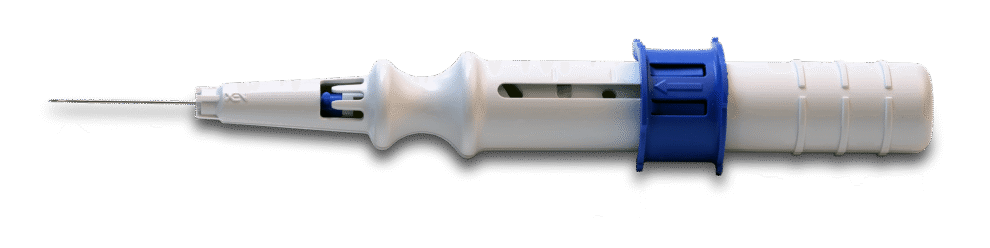
Goniotomy is a procedure where your surgeon makes a small incision in the eye’s natural drainage system to help fluid flow. The procedure utilizes a specialized microscope in a surgical setting. Different tools can be used for goniotomy procedures.
The Kahook Dual Blade is a type of specialized goniotomy tool that is designed with a dual-blade to remove a small strip of the drainage tissue.
The SION system is another type of specialized goniotomy instrument that makes very precise incisions in the eye’s drainage tissue.
Both goniotomy procedures work with your eye’s existing drainage system rather than creating new pathways or implanting foreign material.
OMNI Surgical System
The Omni Surgical system utilizes two approaches. First, it gently stretches and reopens your eye’s natural drainage canal by injecting a gel-like substance to restore the canal’s proper shape. Then, it makes a controlled incision in the drainage tissue to create a direct pathway for fluid to flow.
This two-step approach tackles drainage problems from multiple angles, potentially giving you better pressure control than procedures that only address one issue.
Alloflo (Ahmed Valve)
The Alloflo is a new glaucoma treatment that achieves lower intraocular pressure by promoting fluid flow through the uveoscleral pathway rather than through the trabecular meshwork. It utilizes a processed scleral tissue implant to create a reinforced space. This offers a biocompatible solution for moderate to advanced glaucoma cases.
Xen Gel Stent
The Xen stent is a tiny, soft tube made from natural collagen that creates a new drainage pathway for fluid in your eye.
What’s special about it is that it can be placed through a very small incision using a minimally invasive approach, unlike traditional drainage implants that require more extensive surgery. Once placed, the stent allows fluid to drain from inside your eye to a space underneath the clear covering, where your body absorbs it naturally.
This creates what’s called a “bleb.” A bleb is a small, usually invisible bubble under the eye’s surface.
While the Xen offers a gentler alternative to traditional drainage surgery, it still requires careful monitoring and sometimes additional procedures to keep the drainage working properly.
What can I expect after MIGS
As these treatments are minimally invasive, the recovery time is a lot less compared to traditional glaucoma treatments. As a mild sedative may be used, you will need to arrange for a ride home. Almost all patients can go back to work and resume their other daily activities within a rapid timeframe. After the procedure is finished, we thoroughly discuss each patient’s post-treatment needs for taking care of their eyes throughout the recovery period. We also require all MIGS patients to schedule a series of important follow-up visits at Ophthalmology Associates of the Valley so we can carefully monitor their intraocular pressure during the recovery period.
Patients can expect to have a few prescriptions to fill after their surgery to prevent infection and to decrease inflammation within their eyes. It is very important to follow the post-surgical instructions and attend all follow-up appointments with your Los Angeles, CA eye care provider as the treatment regimen is frequently modified.
MIGS FAQs
Professional Guidance for Advanced Glaucoma Management
In the past, patients suffering from the later stages of glaucoma only had one solution for treatment. However, MIGS and laser surgeries now allow us to offer numerous kinds of treatments to help patients manage their glaucoma.
Contact Ophthalmology Associates of the Valley in Encino or West Hills, to ask about a MIGS exam with an experienced ophthalmologist who can help you effectively manage your condition.